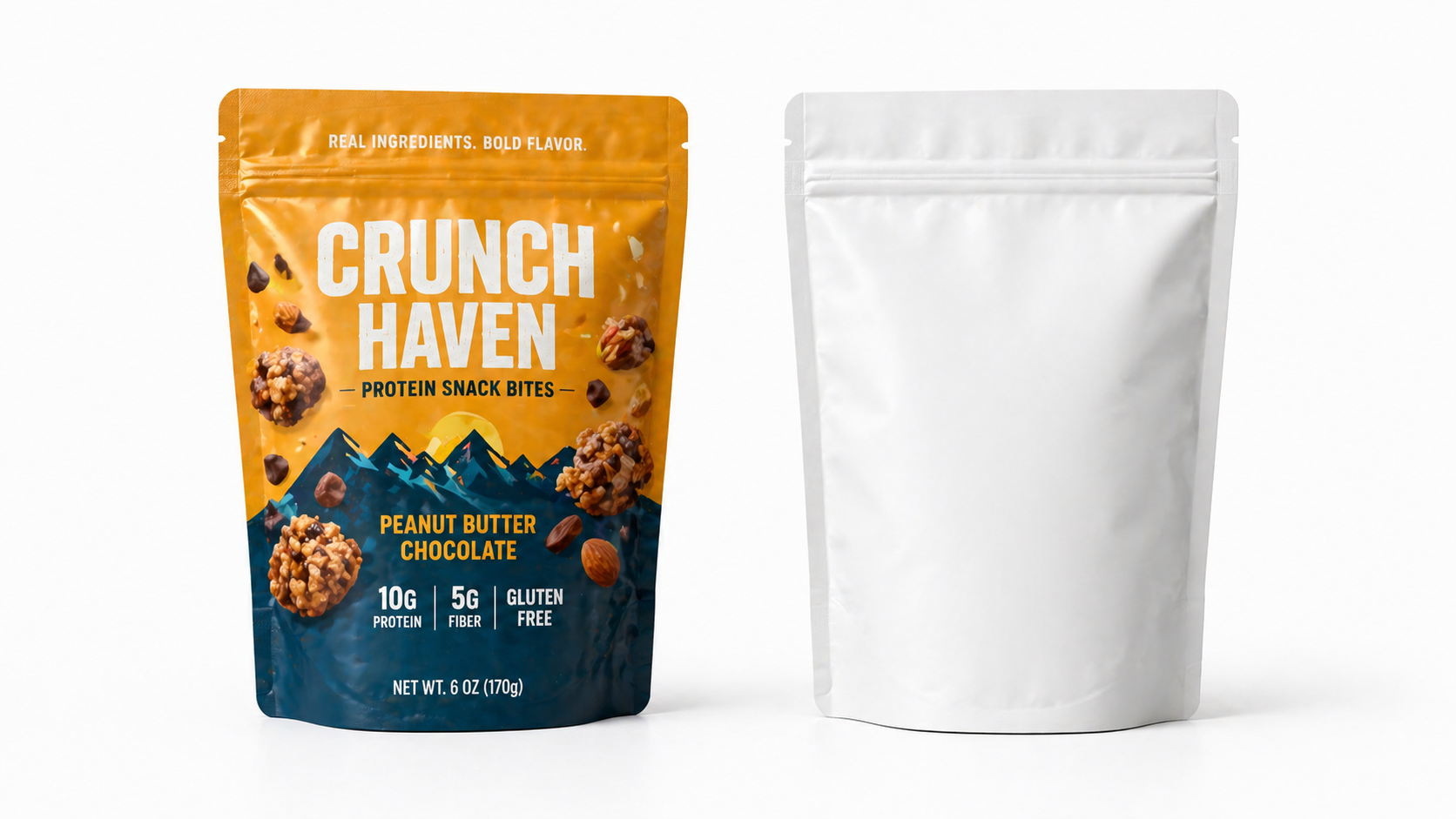
The Problem
A growing snack brand was ordering 10,000 units per SKU through a traditional flexographic printer. With 4 flavors, that meant 40,000 bags minimum per order. Lead times were 8 weeks. Every time they wanted to test a new flavor or update their design, they had to commit to another 10,000 units and wait two months.
The result: thousands of dollars in dead stock sitting in a warehouse. Bags with old branding they could not sell. New flavor ideas that never launched because the risk was too high.
The Solution
They switched to PackMint's digital printing with a 500-unit minimum. Instead of ordering 10,000 bags of an unproven flavor, they ordered 500. Tested it at farmers markets and online. When it sold, they reordered. When it did not, they lost $200 instead of $5,000.
The Results
Within 6 months of switching to PackMint:
- Per-unit packaging cost dropped 40% compared to their old supplier
- Dead stock dropped to zero because they only ordered what they could sell
- 3 new flavors launched in 6 weeks instead of the 6 months it used to take
- Design iterations happened in days, not months
- Total packaging spend decreased despite ordering more frequently
Why Digital Printing Changed Everything
Traditional flexographic printing requires plates that cost thousands of dollars and take weeks to produce. Any design change means new plates. Digital printing eliminates plates entirely. No setup fees, no plate costs, no minimum color requirements. The same photo-quality output at 500 units or 50,000.
For small and mid-size brands, this means you can iterate on your packaging as fast as you iterate on your product. Test flavors, seasonal designs, limited editions, and rebrand without financial risk.
Key Takeaway
The biggest packaging cost is not the per-unit price. It is the cost of inventory you cannot sell. Low minimums and fast turnaround eliminate that risk entirely.